
Technical Insight
Bearing failure: reading the evidence before you fit the replacement
A failed bearing is the best diagnostic tool on site, and most of them go in the bin unread. Here is how to interpret what the raceways and rolling elements are telling you.
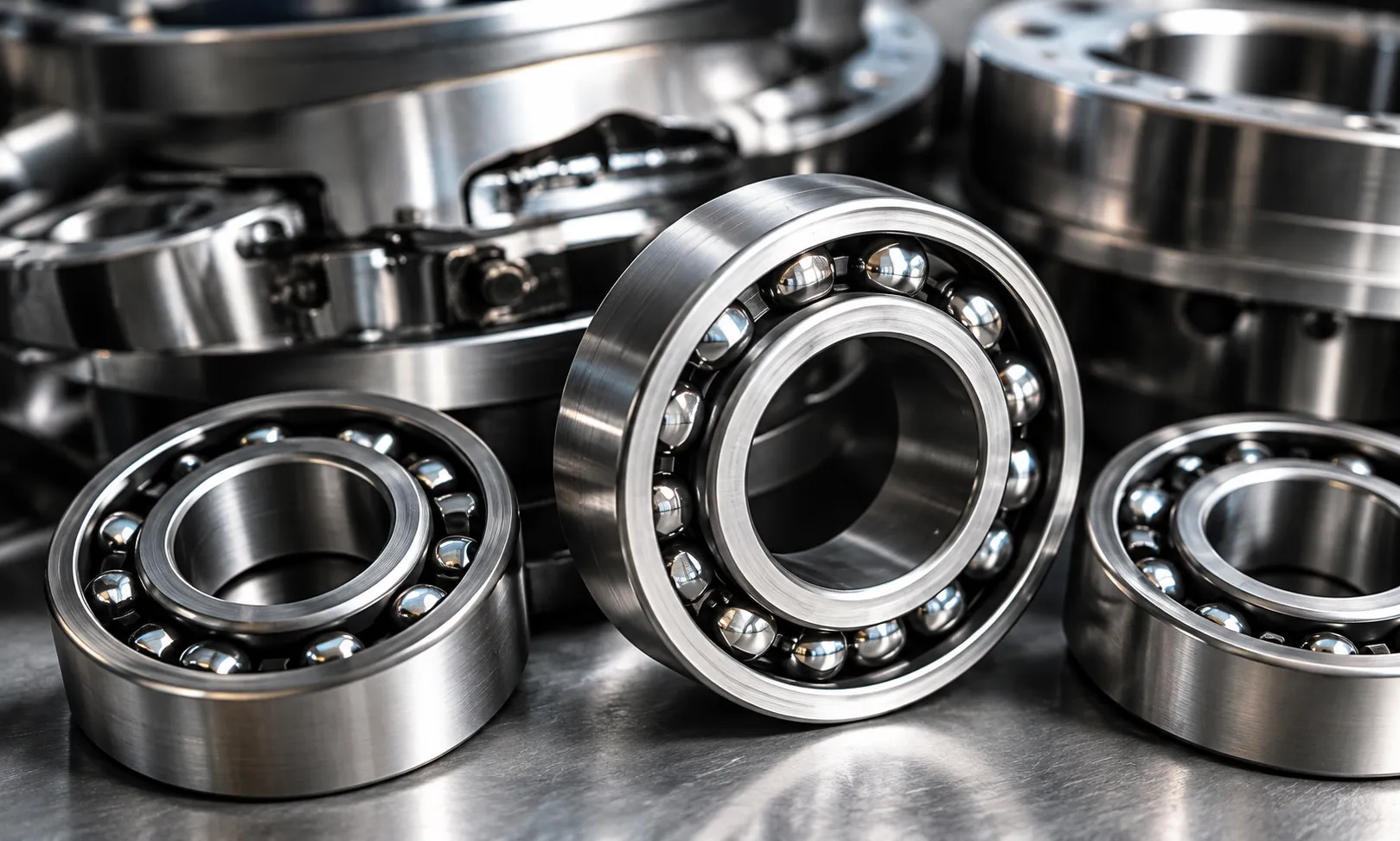
When a bearing fails, the pressure is to get the machine running. The old one goes in the bin, a new one goes in, and the line restarts. Six weeks later the same position fails again, and nobody is any wiser than they were the first time.
The failed bearing is the best diagnostic tool you have. It carries a physical record of how it was loaded, lubricated, aligned and fitted. Reading it takes ten minutes and it is the difference between replacing a part and fixing a problem.
Preserve the evidence
Before anything else, protect what the bearing can tell you:
- Mark the outer ring position relative to the housing and the load direction before removal, so you can locate the load zone afterwards.
- Do not wash it out immediately. The condition and colour of the grease, and anything in it, is part of the picture.
- Photograph both raceways, the rolling elements and the cage under good light.
- Record running hours, recent process changes, ambient temperature, and when it was last lubricated and with what.
Read the load zone first
On a bearing carrying a steady radial load with a rotating shaft, the wear path on the outer raceway should sit in one place, roughly a third of the circumference, and be even in width. Anything else is telling you something.
A path that runs diagonally across the raceway, wider on one side than the other, points to misalignment between shaft and housing, or to a housing bore machined out of true. A path that goes all the way round the outer ring on a fixed outer application suggests the outer ring has been turning in its housing, usually because the fit is too loose or the housing bore has worn. A path that is offset to one side on a deep groove ball bearing often means axial preload from thermal growth with no float allowed at the non-locating end.
Common damage patterns and what causes them
Spalling in the load zone
Flakes and pitting confined to the wear path, with the rest of the raceway clean, is classic subsurface fatigue. If it appears at or beyond the calculated life, that is a bearing that did its job. If it appears early, look at the actual loading rather than the bearing: belt tension, coupling misalignment, an overhung load or an oversized pulley will all shorten fatigue life dramatically.
Dents with raised edges
Small indentations with a lip around them mean hard particles have been rolled into the raceway. That is contamination, and the source is almost always the seal, the lubricant or the fitting process. Look for washdown ingress, a failed lip seal, dirty grease guns, or a grease nipple that was not wiped before the gun went on.
Frosted, matt or fluted raceways
A dull grey, frosted appearance, or fine evenly spaced flutes running across the raceway, is electrical erosion. On drive-driven motors this is stray shaft current finding a path to earth through the bearing. The fix is not a better bearing on its own. It needs a proper earthing path, a shaft earthing ring, an insulated bearing at the non-drive end, shielded motor cable correctly terminated at both ends, or some combination of those.
Discolouration and smearing
Straw, blue or black temper colours mean the bearing ran hot. Smeared, welded looking patches on rolling elements and raceways mean metal to metal contact under sliding rather than rolling. Both point at lubrication: wrong grease, wrong quantity, wrong interval, incompatible greases mixed together, or a lubricant that cannot handle the temperature. Over-greasing causes as many failures as under-greasing, because a fully packed bearing churns the grease and heats itself.
Damage before the machine ever ran
Evenly spaced dents at rolling element pitch, with no raised edges, are brinelling from impact during fitting, usually a drift or a hammer applied through the rolling elements. The same pattern with polished, shallow marks on a machine that sits idle next to a vibrating neighbour is false brinelling. Both are avoidable: use the correct fitting tool or induction heater, apply force only to the ring being fitted, and support idle equipment properly.
Close the loop
Once you have a cause, change something. Correct the alignment, fix the seal, change the lubricant or the interval, address the shaft currents, or move to a bearing with a specification that suits the duty, such as a different clearance class, a sealed unit for a washdown area, or a hybrid bearing where electrical erosion is the issue.
If the replacement is identical to the failed part and nothing else changed, you have not repaired the machine. You have reset the clock.
Keep the failed bearings for a while, labelled with the asset and the date. A shelf of failures from the same position, photographed and annotated, makes the case for a design change far better than any single incident report.
Written by the Rowlec team
We have supplied and managed industrial spares for UK manufacturers since 2010, so everything here comes from work done on customer sites rather than from a catalogue.
Filed under Technical Insight
All news & insightsKeep reading
More from the
Rowlec team.
 Inventory Management
How to build a critical spares list that actually protects production
Most critical spares lists are written once and then quietly drift out of date. Here is a practical method for deciding what to hold, how much of it, and who owns the decision.
 Inventory Management
Five signs your engineering stores are costing you more than you think
Stores areas rarely get attention until something goes missing mid-breakdown. These five symptoms show up on almost every site we visit, and each one has a cost attached to it.
 Technical Insight
Obsolete drive? What to do before you replace the whole machine
An obsolete inverter does not have to mean a capital project. There is a ladder of options between a failed drive and a full machine replacement, and most sites skip the cheap rungs.

Bring us the awkward one
Obsolete, undocumented or urgent. Those are the enquiries we are best at.
Send an enquiryRapid. Reliable. Responsive.
Emergency deliveries and around-the-clock support for our SLA customers.
Learn more