
Inventory Management
Five signs your engineering stores are costing you more than you think
Stores areas rarely get attention until something goes missing mid-breakdown. These five symptoms show up on almost every site we visit, and each one has a cost attached to it.
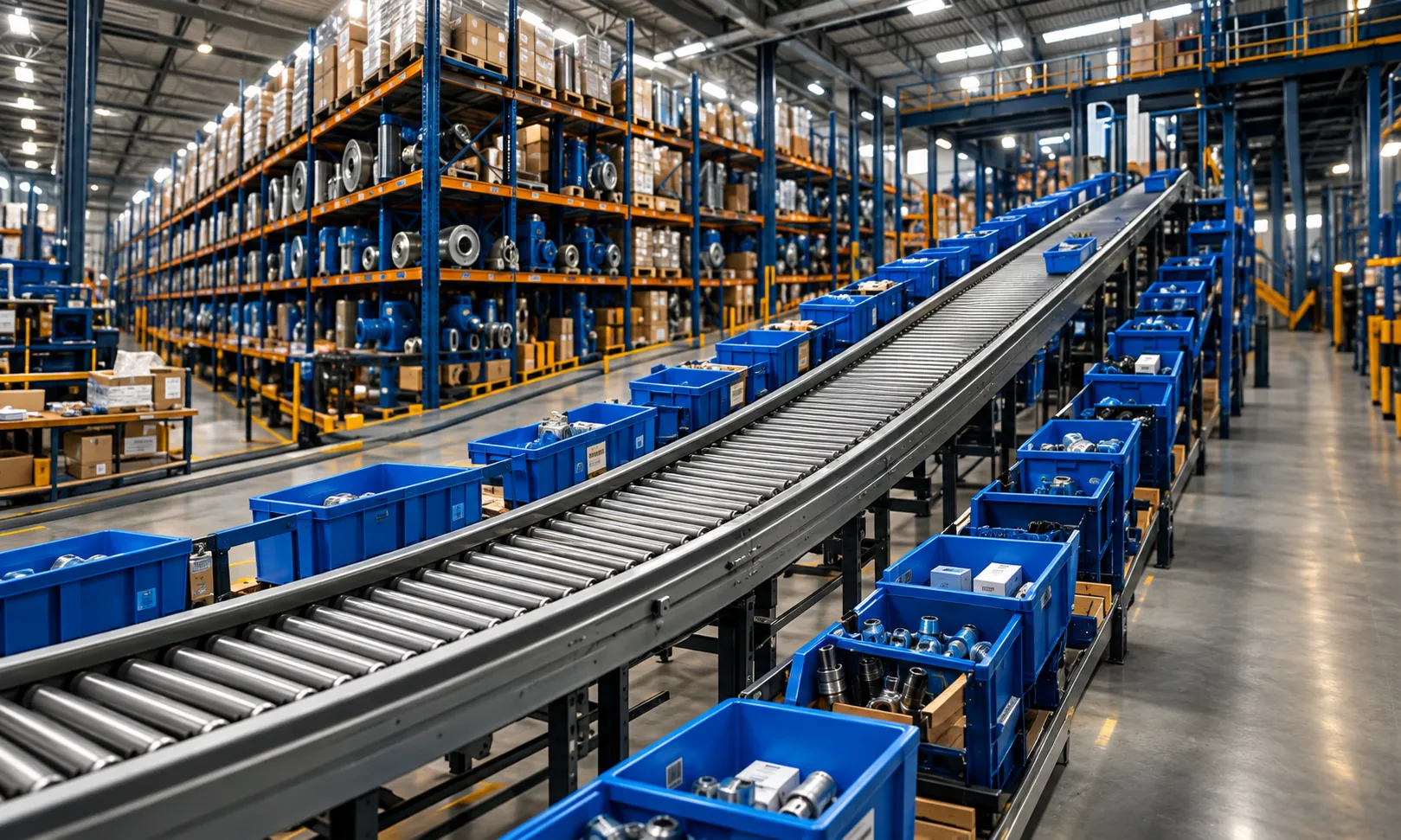
Engineering stores rarely get attention until something goes missing during a breakdown. The rest of the time they are treated as a cupboard with a lock on it. That is a shame, because the stores is one of the few places in a plant where a week of honest work produces savings you can point at.
Here are five symptoms, in roughly the order we see them, that a stores area is costing more than the budget suggests.
1. Engineers go shopping
Watch what happens when a fitter needs a part. If the answer involves walking to the stores, not finding it, checking two other cupboards, asking a colleague, and eventually taking one out of a machine that is down anyway, you are paying skilled labour to look for things.
The cost is not only the time. It is the private caches that grow out of it. Once people stop trusting the stores they start keeping their own supply in a toolbox, a locker or the top of a cabinet. That stock is invisible, unvalued, usually obsolete within a year, and it hides the true consumption of everything in it.
2. The same item exists under several part numbers
A 6205 2RS bearing bought from three suppliers over five years will often sit in three separate locations under three separate codes, at three different prices. Multiply that across bearings, belts, seals, contactors, sensors and consumables and the picture gets expensive.
Duplication inflates stock value, hides genuine availability, and weakens your position on price, because volume that should be consolidated into one line is scattered across several. It also makes usage data meaningless, which then makes every reorder decision a guess.
3. Nothing has a minimum and maximum
If the reorder trigger is somebody noticing a gap on the shelf, the system is a person, and that person is busy. Min and max levels are unglamorous and they work. Set a minimum from realistic consumption plus a genuine lead time, set a maximum that reflects shelf life and space, and the decision stops depending on who is on shift.
The same applies to how stock is replenished. A Kanban card, a two bin system or a scheduled check by a supplier all remove the same failure mode: nobody looked in time.
4. Stock value is climbing while availability falls
This is the clearest signal of all, and finance usually spots it before engineering does. Stockholding grows year on year, yet the stores still cannot supply what maintenance asks for.
It happens because buying is reactive. A shortage causes a panic order, the panic order overshoots, the surplus sits there, and meanwhile the items that genuinely move are still short. The money is in the building, just in the wrong shapes. A stock rationalisation, comparing what is held against what has actually been consumed over the last twelve months, normally releases cash and improves service at the same time.
5. Nobody owns it
Stores that belong to everyone belong to no one. Without a named owner, standards slip in a predictable order: labelling goes first, then locations, then the record, then trust.
Ownership does not have to be a full-time job or an internal one. On many sites it makes more sense for a supplier to run the replenishment, do the counts, keep the labelling correct and flag the slow movers, while the engineering team keeps ownership of what is technically right. What matters is that somebody is accountable for the state of the shelves on any given Monday.
What good looks like
A stores that supports production rather than frustrating it usually has the same handful of features:
- Every item has one location, one label and one part number, and the label matches the system.
- Fast-moving consumables sit at the point of use, not behind a locked door on another floor.
- Min and max levels exist, are reviewed, and are based on real consumption.
- Critical spares are separated, protected and clearly linked to the assets they cover.
- Someone is named as responsible, and replenishment happens whether or not that person is on holiday.
The stores is not a cost centre. It is the buffer between a fault and a stoppage. Judge it on how quickly an engineer gets the right part in their hand, not on how much it holds.
None of this requires a new system or a capital project. It requires one honest walk round with a notepad, an export of the last twelve months of usage, and a decision about who owns the result.
Written by the Rowlec team
We have supplied and managed industrial spares for UK manufacturers since 2010, so everything here comes from work done on customer sites rather than from a catalogue.
Filed under Inventory Management
All news & insightsKeep reading
More from the
Rowlec team.
 Inventory Management
How to build a critical spares list that actually protects production
Most critical spares lists are written once and then quietly drift out of date. Here is a practical method for deciding what to hold, how much of it, and who owns the decision.
 Technical Insight
Bearing failure: reading the evidence before you fit the replacement
A failed bearing is the best diagnostic tool on site, and most of them go in the bin unread. Here is how to interpret what the raceways and rolling elements are telling you.
 Technical Insight
Obsolete drive? What to do before you replace the whole machine
An obsolete inverter does not have to mean a capital project. There is a ladder of options between a failed drive and a full machine replacement, and most sites skip the cheap rungs.

Bring us the awkward one
Obsolete, undocumented or urgent. Those are the enquiries we are best at.
Send an enquiryRapid. Reliable. Responsive.
Emergency deliveries and around-the-clock support for our SLA customers.
Learn more